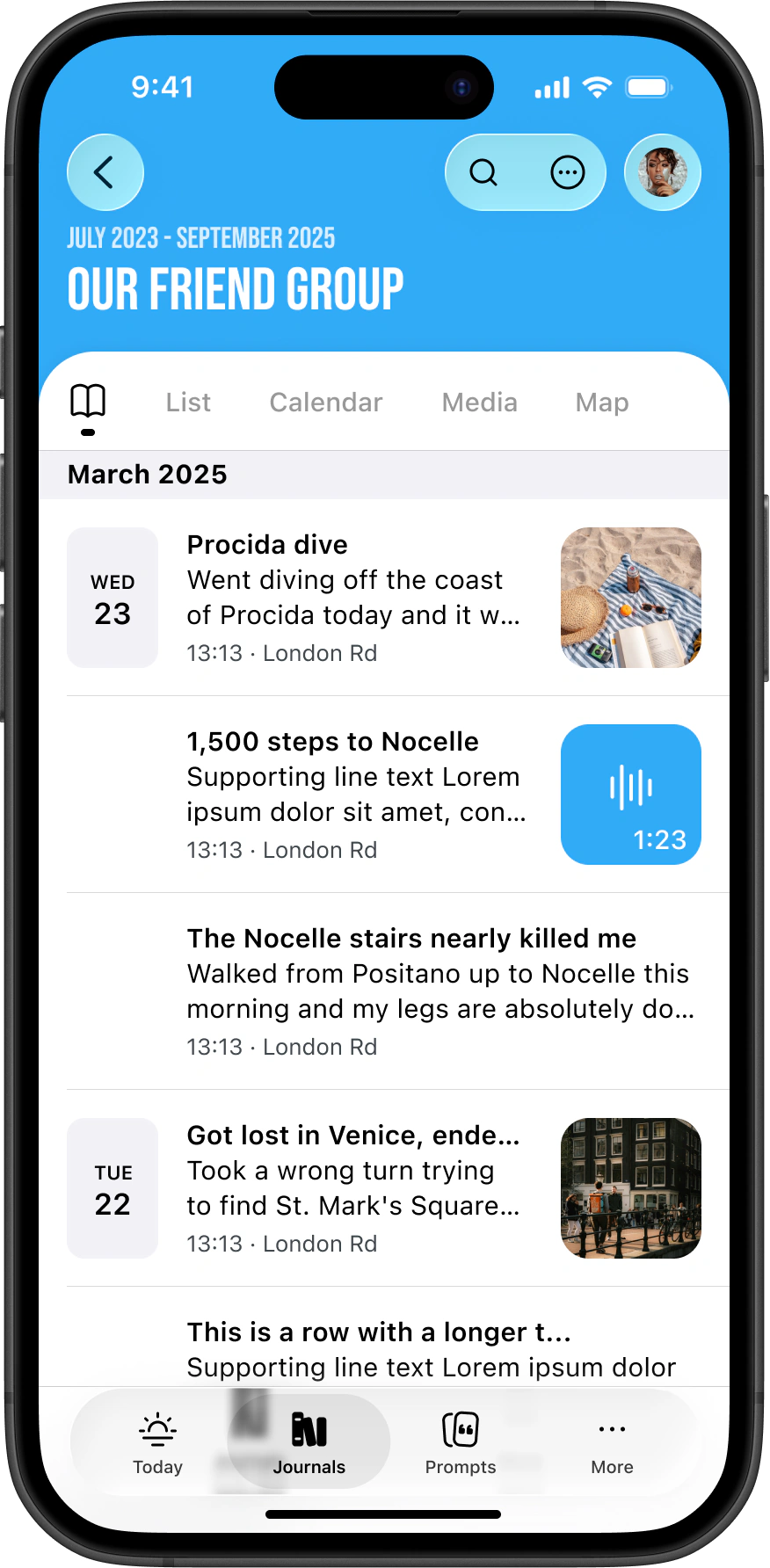
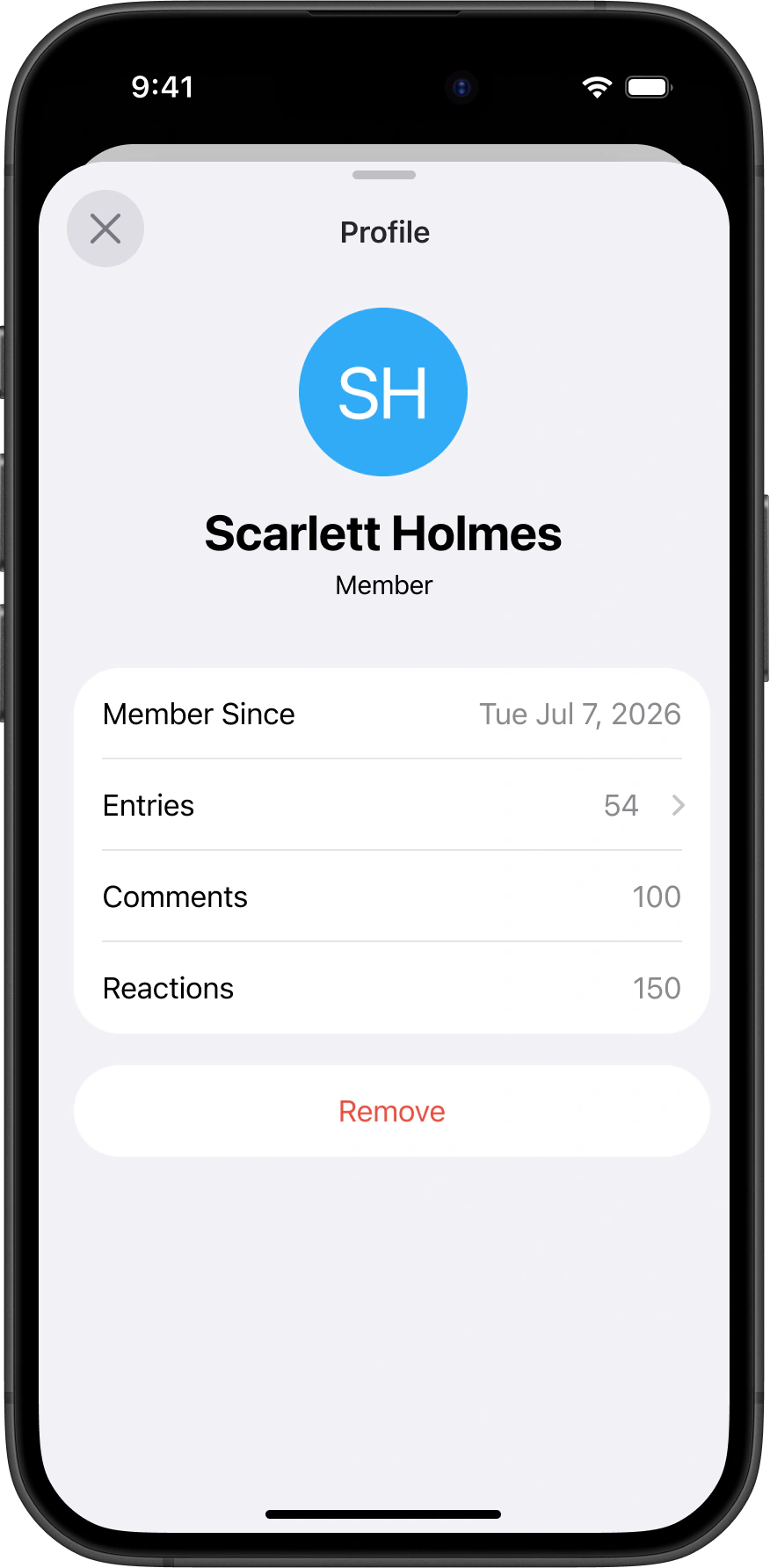
I led the design of Shared Journals for Day One on iOS and Android. People can write in a journal together, comment on entries and leave reactions, with the same end-to-end encryption as their private journals.
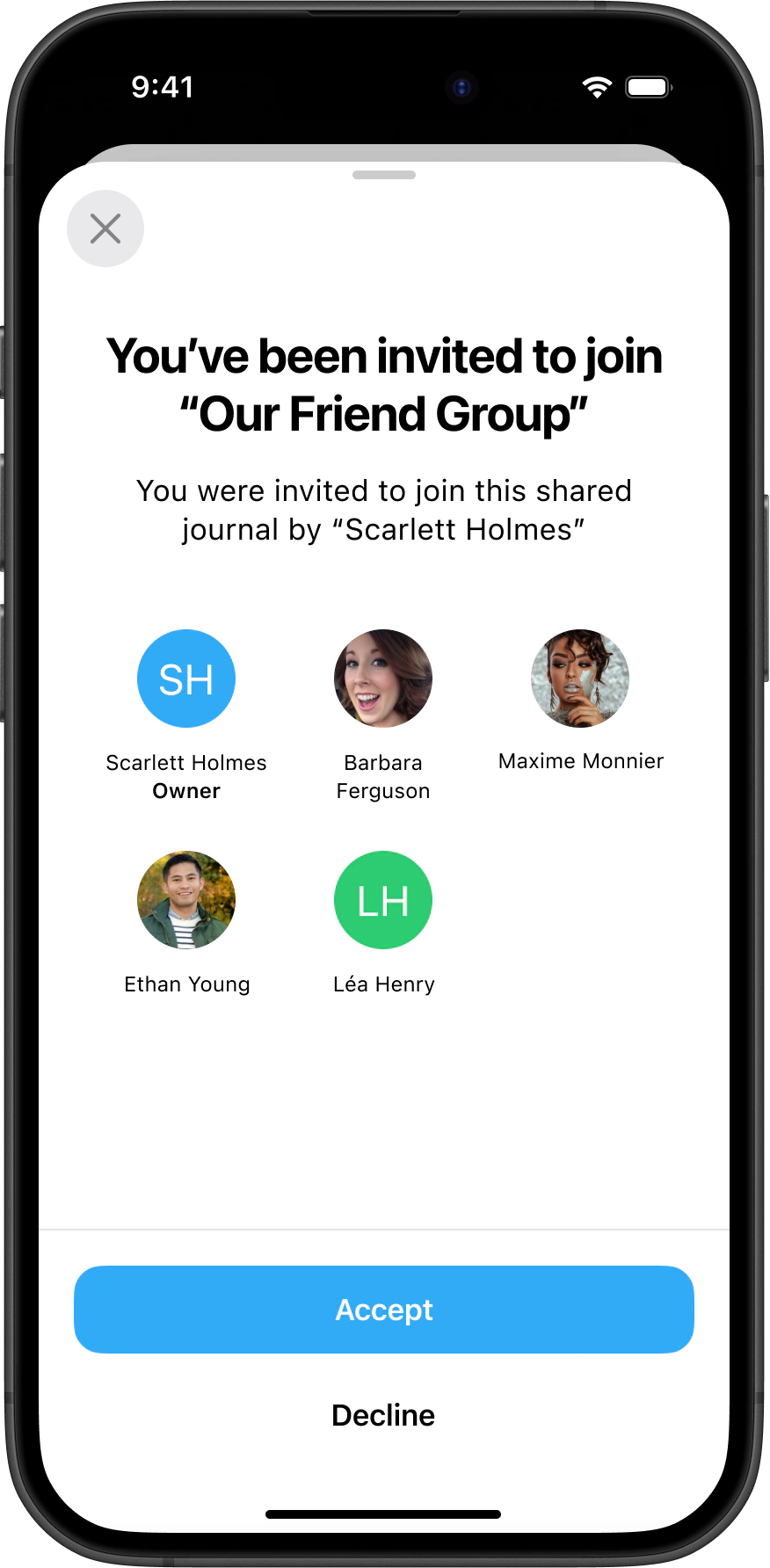
I worked on how people invite others and manage a journal, as well as the interactions around each entry. The invitation flow took several iterations: joining depended on receiving an encryption key from the owner’s device, even when the owner wasn’t using the app.
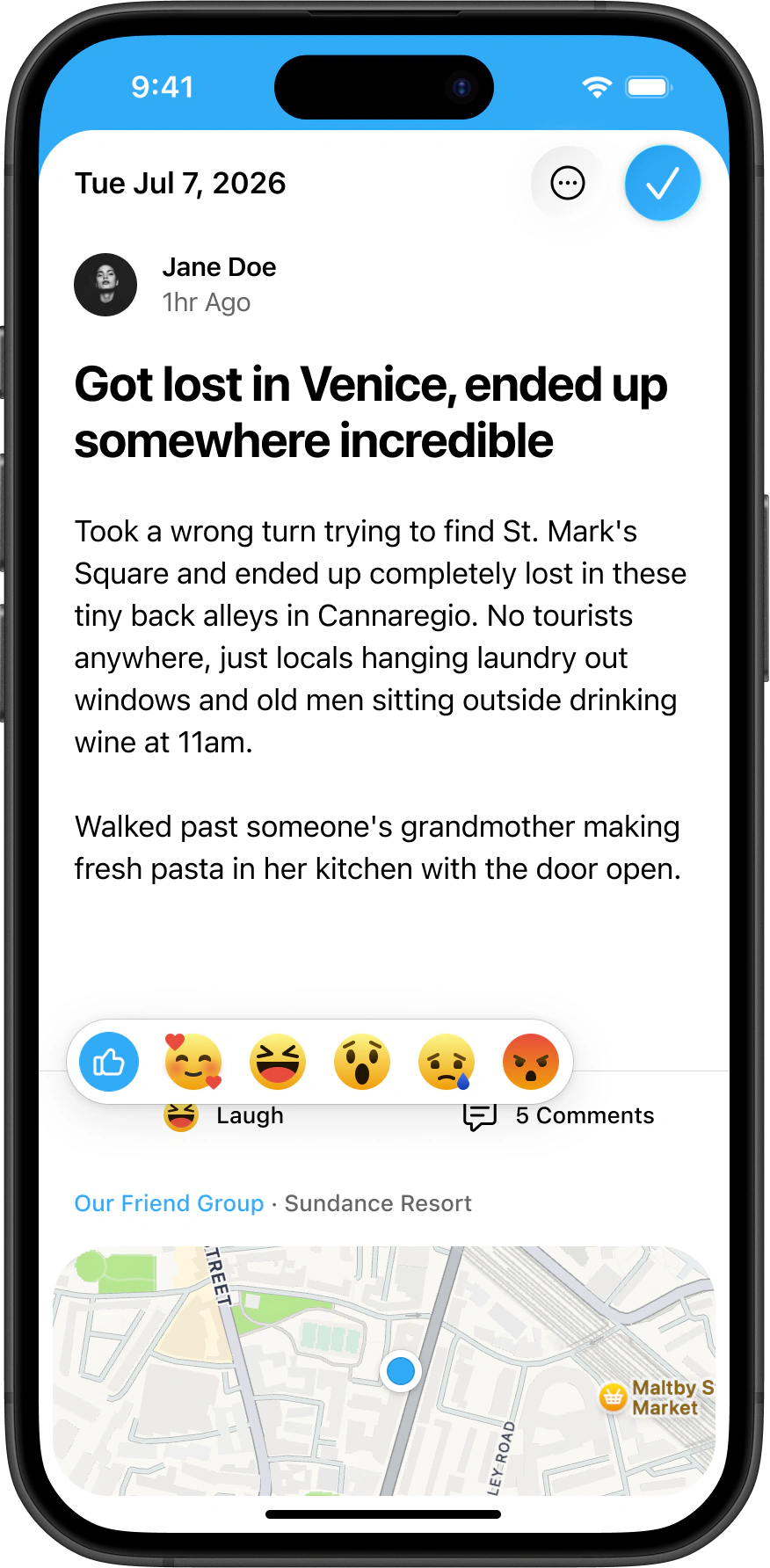
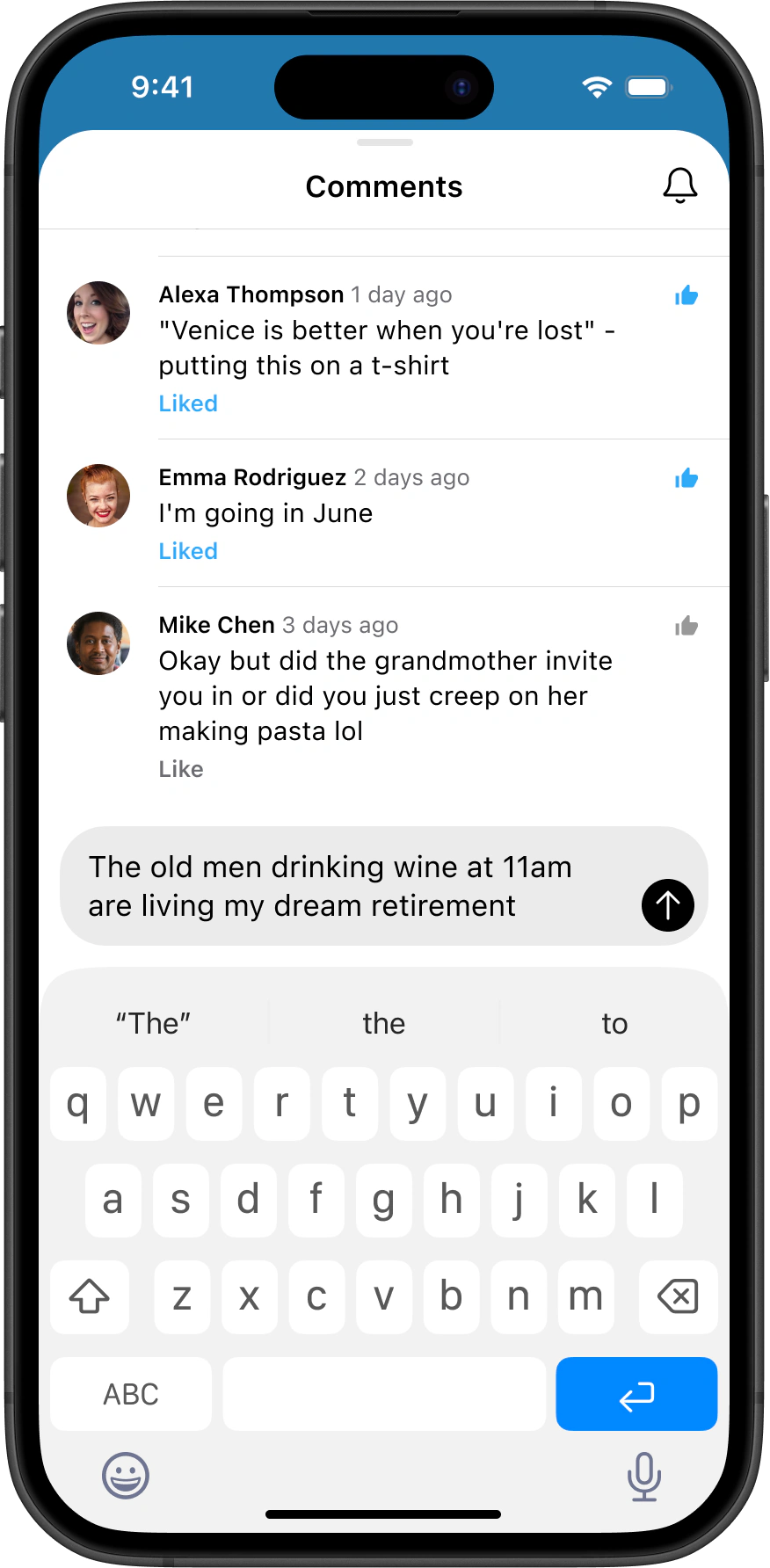
I used familiar comments and reactions so people could respond to what someone had written. These interactions stay within the journal, alongside the entries that prompted them.
We tried the feature during a team meetup in Mexico, writing about the week in one shared journal. Using it together gave us a list of design fixes before launch.
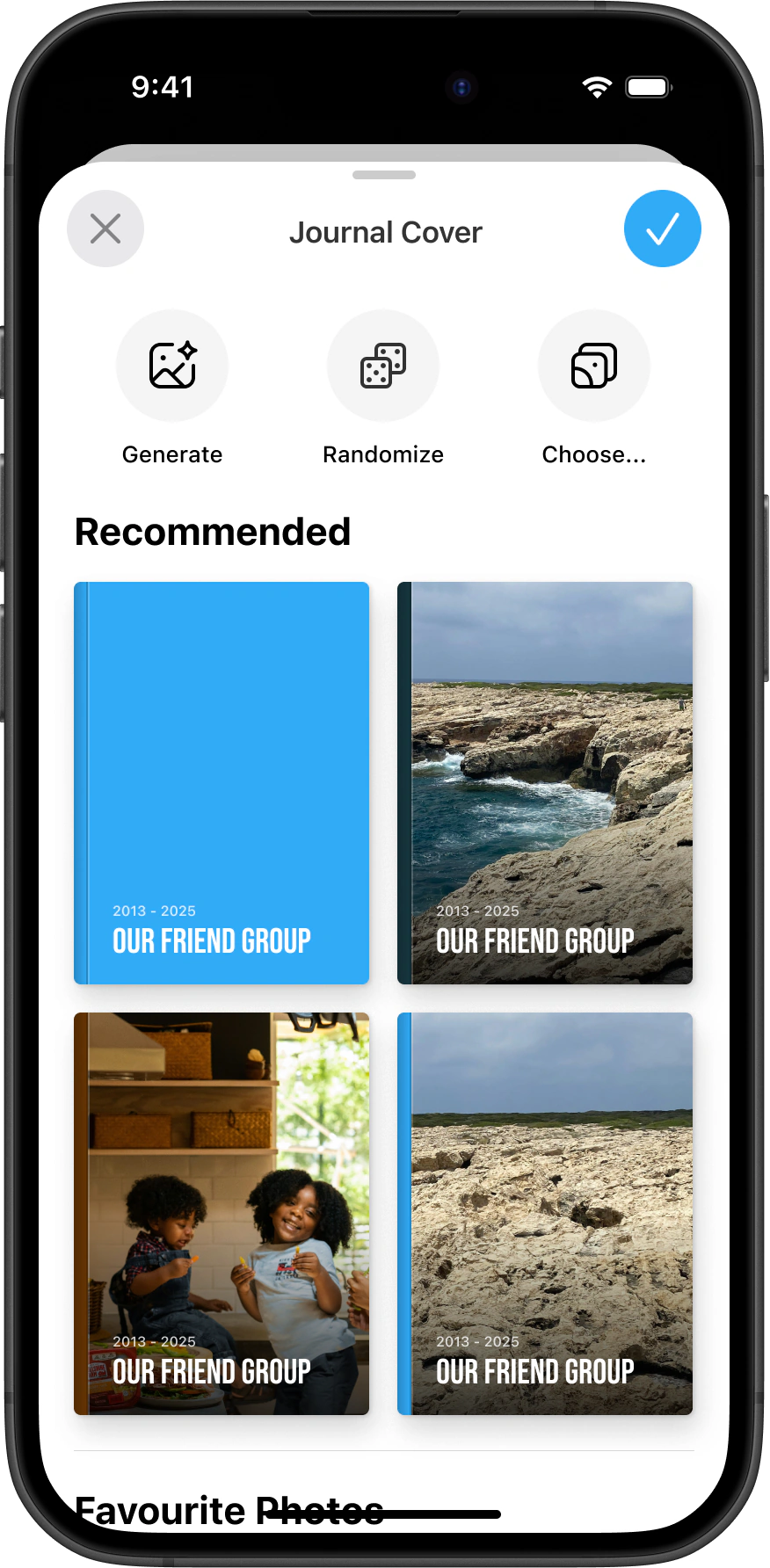
During the creation work, I realised that an existing journal could become a shared one by adding members. I made sharing a setting on the journal, so people could keep using the journal they already had.
That setting needed care. A journal can hold very private writing, so enabling sharing had to be a deliberate decision. I considered asking people to type a confirmation phrase as an extra step.
The first invitation flow asked the recipient to accept, then press another button to request an encryption key from the owner. They still had to wait for the owner to respond before they could read the journal.
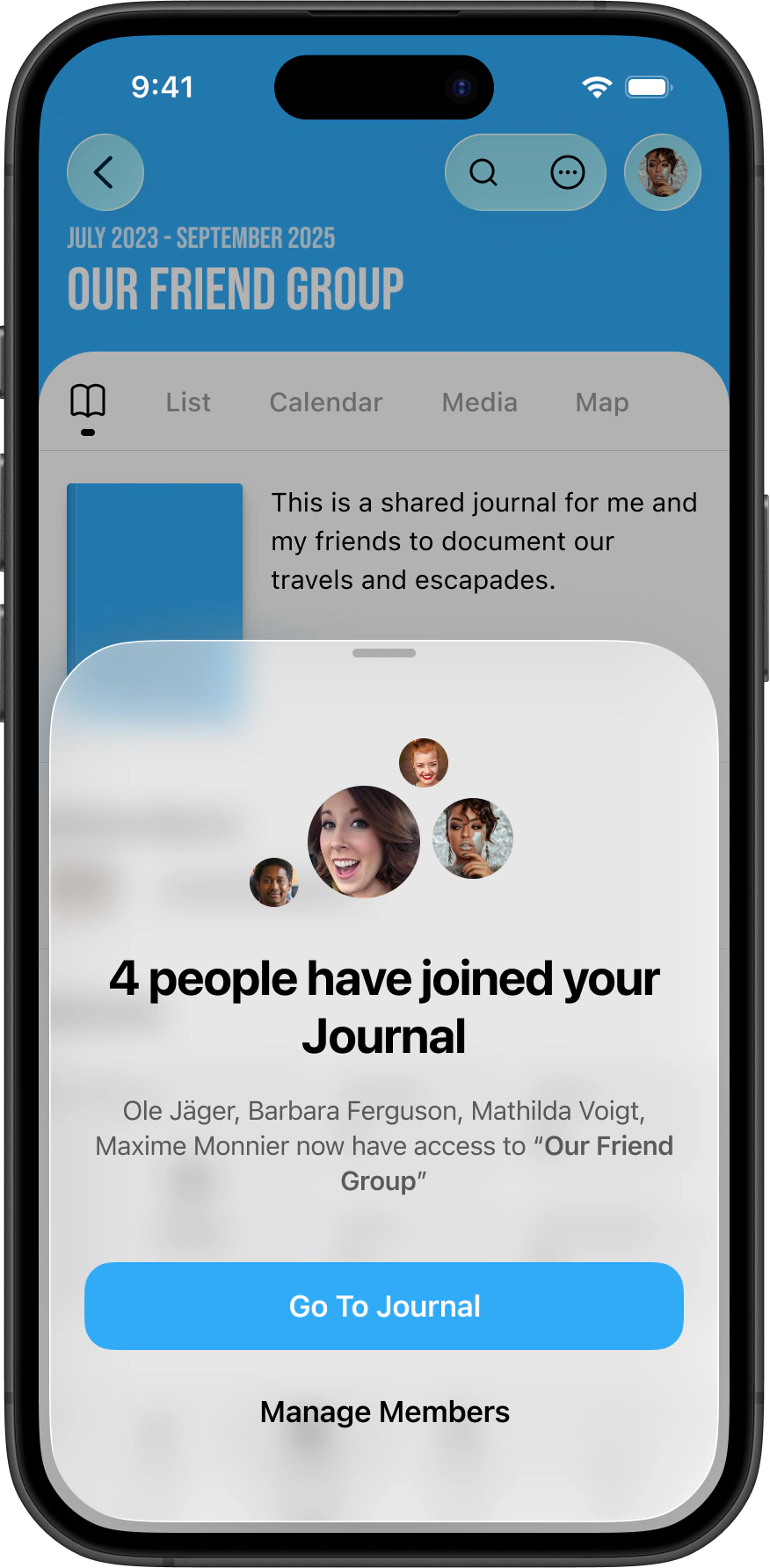
I wanted accepting the invitation to be enough. We changed the flow to use silent notifications that wake the owner’s app and transfer the key in the background.
An early fallback still had a request button when the background transfer failed. We removed that too. The app notifies the owner automatically, while the recipient sees a message explaining that access is on the way.
After launch, most shared journals were being used by pairs, and many still had only one member. We surveyed those owners and interviewed five of them over Zoom. All five had intended to share a journal with their partner.
They understood the feature, but didn’t realise they could invite someone who wasn’t already on Day One. The interviews also revealed several smaller points of friction in the invitation flow. That gave us specific parts of the setup to improve.
People also asked for comments and reactions in their private journals. They wanted to respond to their own entries as well as someone else’s.